Anthropic's $4 Model Just Beat Its Own $10 Flagship. Recalculate Your Stack.
Claude Opus 5.5 and GPT-6 Sol/Luna both got 40-50% cheaper on the same day, and Anthropic's own numbers show the cheaper Opus tier now beats the pricier Fable tier on agentic coding. The default 'pay more, get more' assumption doesn't hold anymore.
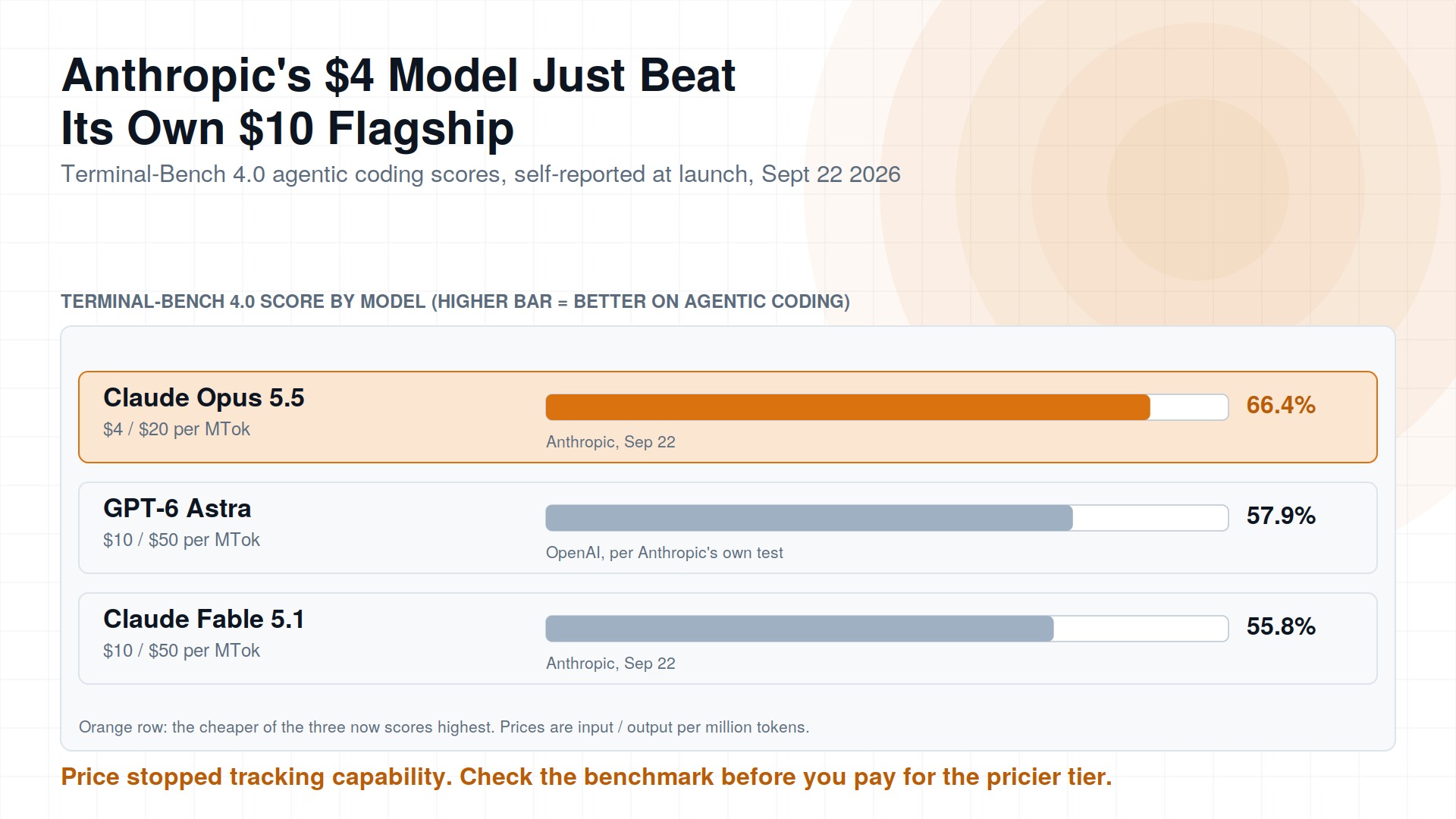
On September 22, Anthropic cut Claude Opus 5.5 to $4 per million input tokens and $20 per million output, down 20% from Opus 5. OpenAI moved the same day, cutting GPT-6 Sol from $4/$20 to $2/$10 and GPT-6 Luna from $0.20/$1.20 to $0.10/$0.50, both a 50% cut from their GPT-5.6 predecessors.
Accurate as of September 2026.
The bigger story is in Anthropic's own benchmark table. Opus 5.5 scores 66.4% on Terminal-Bench 4.0, the agentic coding benchmark. Claude Fable 5.1, Anthropic's pricier top tier at $10 input / $50 output, scores 55.8%. The $4 model beat the $10 model on the benchmark that measures whether an agent can get a coding task done in a terminal.
If you've been routing your hardest agentic coding tasks to the priciest model on the assumption that price tracks capability, that assumption just broke, at least for this one benchmark, from the vendor's own data.
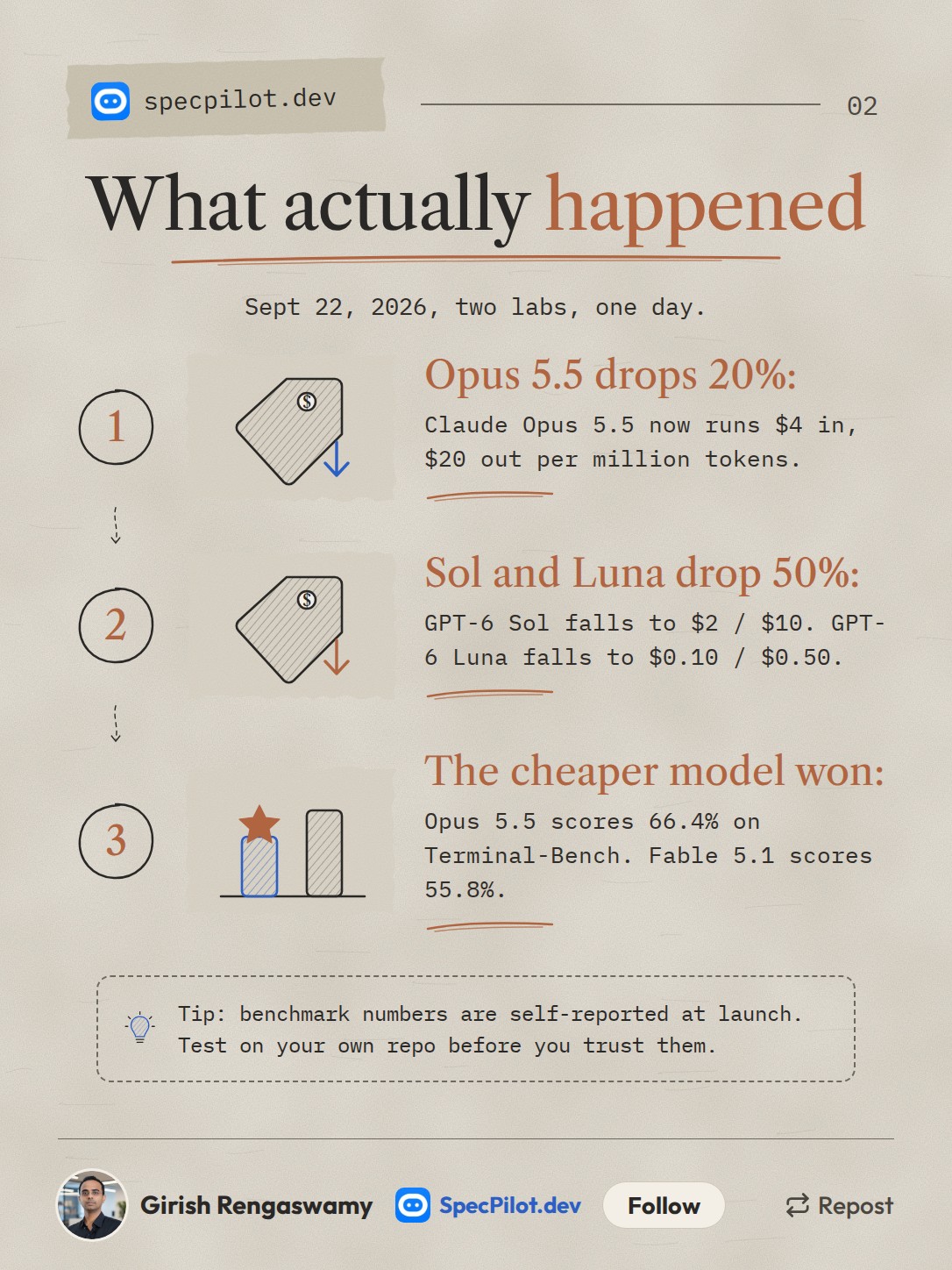
Opus 5.5's 66.4% beats Fable 5.1's 55.8% on the same benchmark, at 40% of the price.
What actually moved
| Model | Vendor | Input $/MTok | Output $/MTok | Terminal-Bench 4.0 | DeepSWE v1.1 (max) |
|---|---|---|---|---|---|
| GPT-6 Luna | OpenAI | $0.10 | $0.50 | - | 66.6% |
| GPT-6 Sol | OpenAI | $2 | $10 | - | 68.8% |
| Claude Opus 5.5 | Anthropic | $4 | $20 | 66.4% | - |
| GPT-6 Astra | OpenAI | $10 | $50 | 57.9%* | - |
| Claude Fable 5.1 | Anthropic | $10 | $50 | 55.8% | - |
*GPT-6 Astra's Terminal-Bench score is Anthropic's own measurement of a competitor model, not OpenAI's, so treat it as directional. Sol and Luna's DeepSWE scores are OpenAI's own, run on a different suite than Terminal-Bench, so the two benchmark columns aren't apples to apples across vendors. Cache-read pricing dropped too: Opus 5.5 hit $0.20/MTok, Fable 5.1 sits at $0.25/MTok.
The one number that does compare cleanly across vendors is the price column. Read it, then pick which benchmark suite matches the work you actually run, and test on your own tasks before switching anything in production.
One refactor, five price tags
Take an agentic coding session that reads enough of a repo to plan a multi-file refactor: 150,000 input tokens of context, tool output, and file contents, then 15,000 output tokens of actual diff. At list price, that session costs $0.90 on Opus 5.5, $0.45 on GPT-6 Sol, $2.25 on GPT-6 Astra or Fable 5.1, and about 2 cents on GPT-6 Luna.
Multiply that by however many of these your agents run in a day, and the gap between defaulting to the expensive model and defaulting to the one that scores well and costs a quarter as much stops being a rounding error on your API bill.
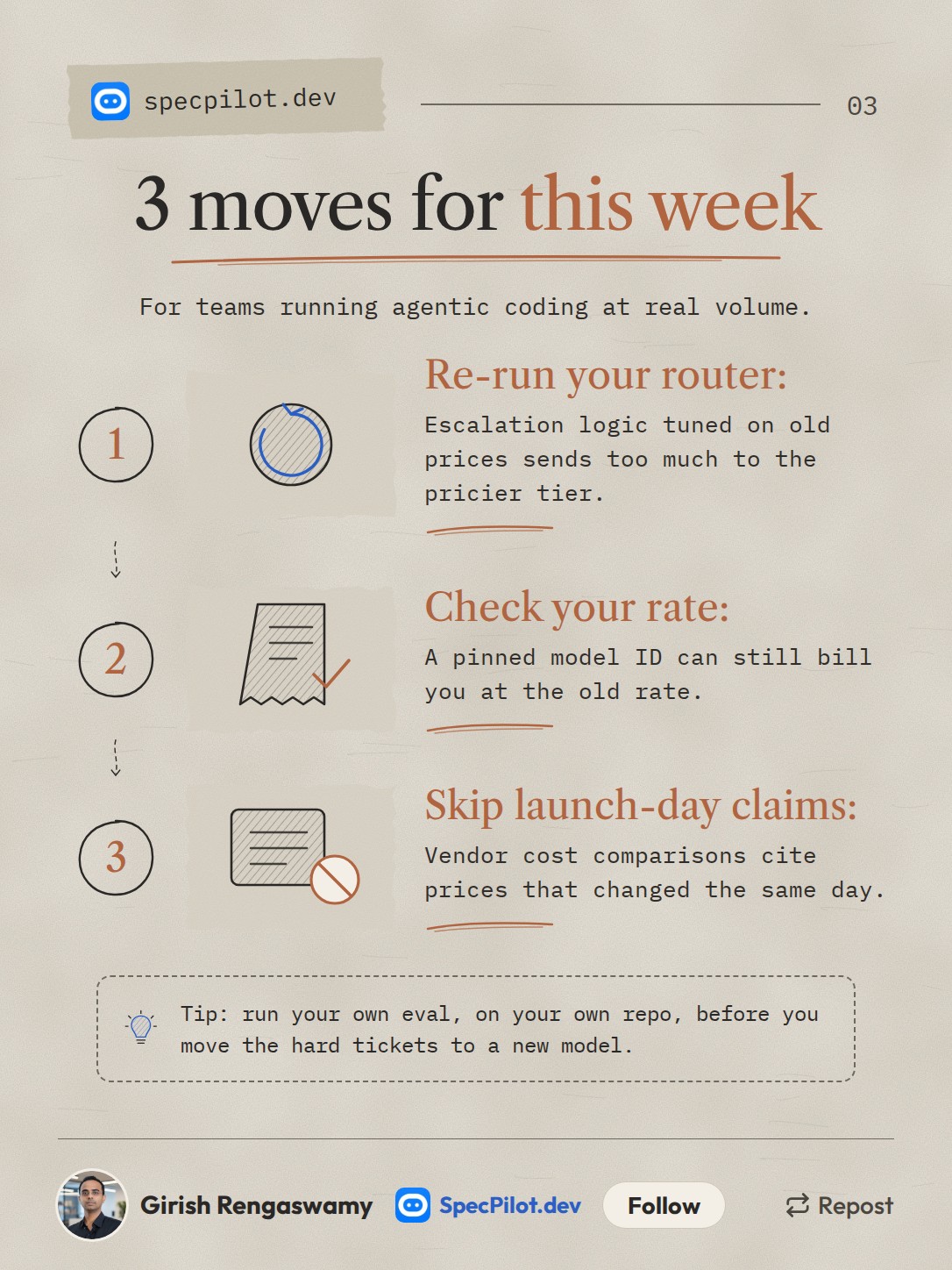
Router logic, billing, and vendor benchmarks all deserve a second look after a same-day price cut.
Three things worth doing this week
-
Re-run your model router's cost assumptions. If you built any logic that escalates to a pricier model for "hard" coding tasks, that logic was tuned against yesterday's prices and yesterday's benchmark gap. Opus 5.5 closing on Fable 5.1 means fewer tasks should be escalating at all.
-
Check whether you're still paying Opus 5 or GPT-5.6 Sol rates. Both are now the wrong side of a 20-50% price cut. If your contracts or self-hosted routing pin a specific model ID instead of a tier, you're leaving money on the table until you update it.
-
Ignore the vendor cost-per-task comparisons published on launch day. OpenAI's post claims GPT-6 Sol runs AutomationBench tasks at "9% of Opus 5's cost." That's true, and it compares against a price Anthropic dropped the same day OpenAI published the claim. Opus 5.5 is 40% cheaper than Opus 5 on typical workloads. Redo the comparison against the model that's actually live before you act on it.
Usage caps, not price, will decide your throughput
Anthropic also raised the five-hour usage caps on Pro, Max, Team, and seat-based Enterprise plans alongside the price cut. That matters more for teams running Claude Code at volume than the per-token number, because usage caps throttle an agentic workflow that fires off dozens of tool calls per task before the token bill does. A cheaper rate you can't spend past a cap doesn't move your throughput.
Neither lab framed this as a response to slowing demand. Both framed it as passing down inference efficiency gains. The practical effect is the same regardless of motive. Agentic coding at the volume a real engineering team runs it just got cheaper to operate, and the model you defaulted to for the hard stuff may no longer be the one ahead on the benchmark you care about.
Don't take either vendor's launch-day comparison chart at face value. Run your own eval suite against your own repo, on both the new cheap tier and the new expensive tier, before you decide which one gets the hard tickets.
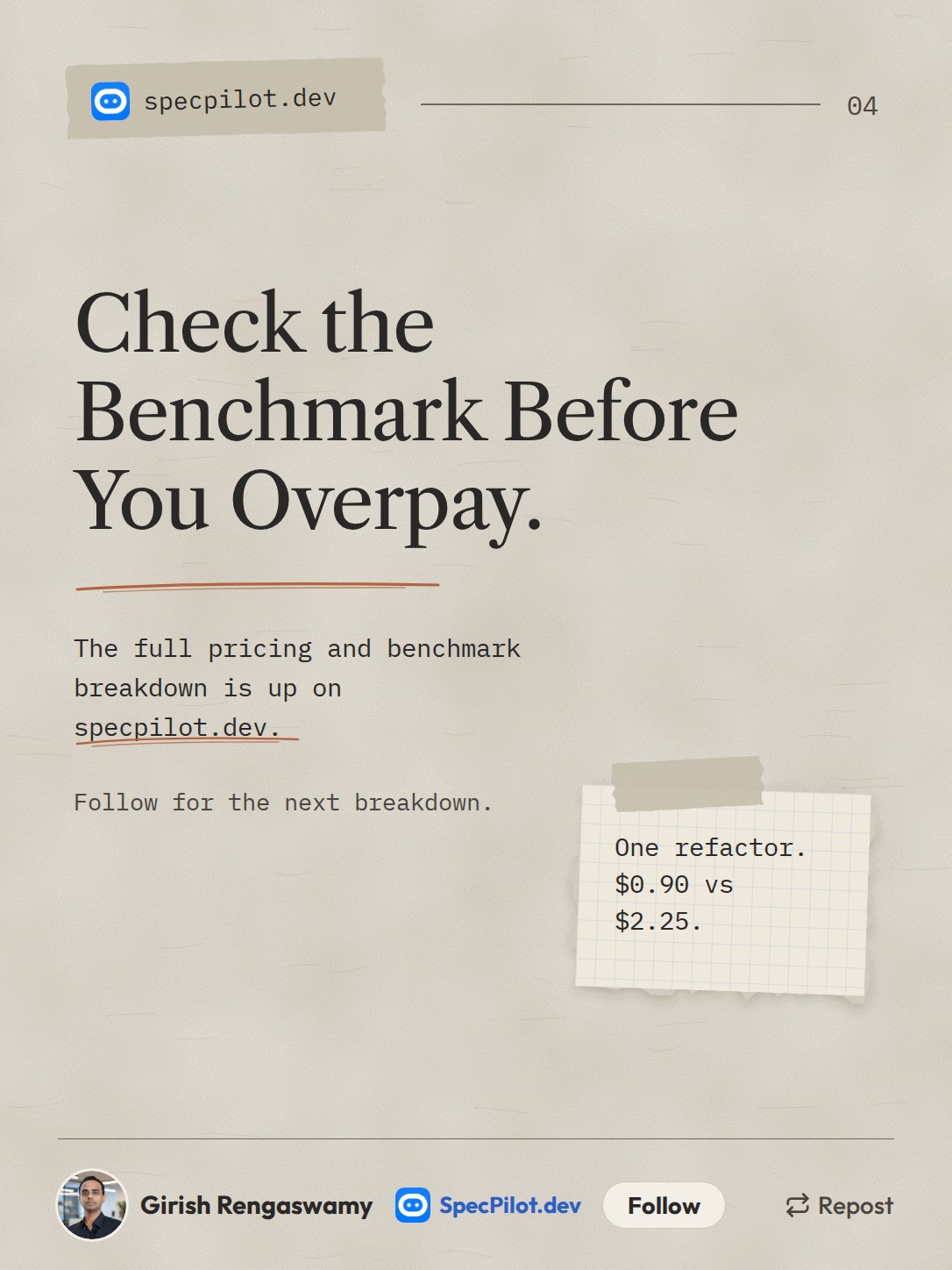
The $1.35 gap on one refactor task is the API bill difference at scale.
Found this helpful? Share it with others!